


2026 Toyota RAV4: Everyday Comfort Is the Real Upgrade
Advertisement

Compact Hybrid SUV Buying Guide
2026 Toyota RAV4: Everyday Comfort Is the Real Upgrade
The sixth-generation RAV4 is quicker, quieter in concept, more efficient and more useful than its predecessor. Its reputation is not the whole story, however: the redesigned hybrid makes the most sense when buyers stop before luxury-grade pricing erodes its practical advantage.
Reputation Meets a Meaningful Redesign
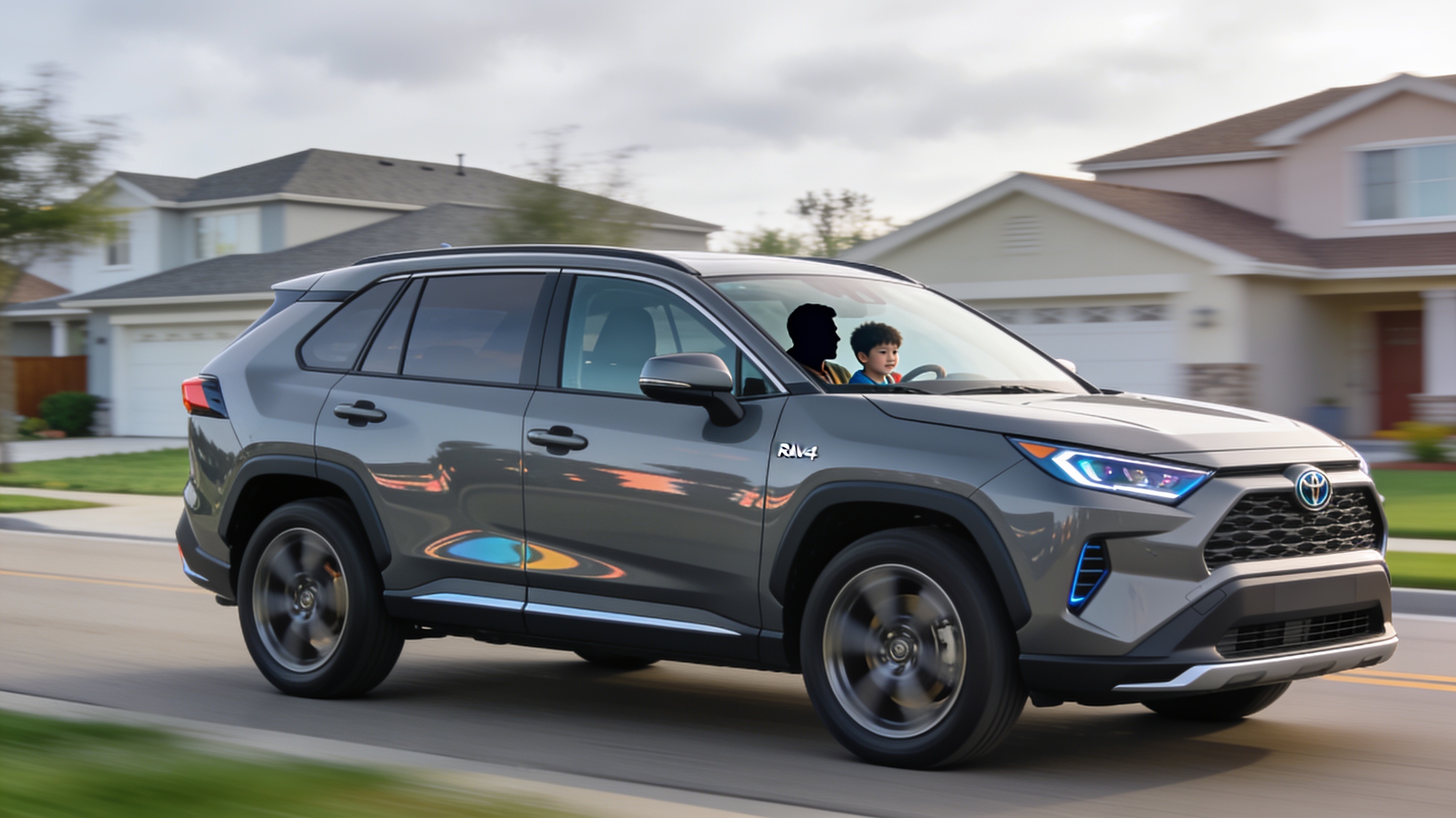
A familiar badge can simplify a shopping list, but it can also hide the question that matters: what does the new vehicle actually do better? The 2026 Toyota RAV4 is not a carryover trading on old goodwill. It begins a sixth generation, drops the gasoline-only powertrain in the United States, and offers either a conventional hybrid or a plug-in hybrid. For the family buyer focused on manageable running costs, the regular hybrid is the center of the story.
Toyota has raised system output, introduced front-wheel drive on selected hybrid grades, reworked suspension and body mounting points, and given every grade a 12.3-inch digital instrument cluster. The result should be judged as a practical tool: comfortable enough for the school run, efficient enough for a long commute, and flexible enough for family or small-business cargo. Its main tension is price. A RAV4 LE starts below several hybrid rivals, yet an XSE or Limited moves into territory where comfort features and brand preference must justify a five-figure climb from the base grade.
Quick Verdict
| Decision point | Editorial judgment |
|---|---|
| Rating | |
| Best for | Families and owner-operators who value fuel efficiency, straightforward daily use and flexible cargo space. |
| Less suitable for | Drivers who prioritize steering feel, maximum luxury per dollar or a genuinely sporty character. |
| Strongest advantage | A standard hybrid lineup that combines up to 43 mpg manufacturer-estimated combined economy with useful packaging. |
| Biggest weakness | Upper grades can dilute the value case without changing the core transportation mission. |
| Recommended strategy | Start with XLE Premium FWD; add AWD only for a real traction or towing need. |
| Ownership watch item | Price insurance, financing and options separately; fuel savings cannot automatically offset a large trim premium. |
Pros and Cons
Pros
- Every U.S. grade uses an efficient hybrid or plug-in hybrid powertrain.
- FWD hybrids make 226 net horsepower, while AWD hybrids rise to 236 horsepower.
- Toyota lists up to 70.4 cubic feet of cargo capacity with the second row folded.
- Toyota Safety Sense 4.0, blind-spot monitoring and rear cross-traffic alert are standard.
- The XLE Premium adds family-useful equipment without requiring Limited pricing.
Cons
- The $43,300 Limited costs $11,400 more than the LE before the $1,095 processing and handling fee.
- Fuel economy varies materially by drivetrain and grade; the Woodland is rated lower than the most efficient FWD versions.
- The comfort-oriented chassis work does not turn the RAV4 into a performance SUV.
- New-generation crash-test results should be checked as agencies publish them rather than inferred from the 2025 model.
Verified 2026 RAV4 Hybrid Snapshot
| Item | Verified detail |
|---|---|
| Powertrain | 2.5-liter four-cylinder with Toyota's fifth-generation hybrid system and a planetary-type continuously variable transmission. |
| Output | 226 net combined hp with FWD; 236 net combined hp with electronic on-demand AWD. |
| Fuel economy | Up to 43 mpg combined manufacturer estimate; grade-specific combined estimates generally range from 38 to 43 mpg. |
| Seating | Five passengers with a 60/40 split reclining, fold-flat rear seat. |
| Maximum cargo | Up to 70.4 cu. ft. with the second-row seats folded, according to Toyota's 2026 brochure. |
| Towing | Up to 3,500 lb on specified AWD grades; LE AWD is listed at 1,750 lb. |
| Displays | Standard 12.3-inch gauge cluster; 10.5-inch multimedia screen standard and 12.9-inch screen available. |
| Basic warranty | 3 years/36,000 miles; powertrain coverage is 5 years/60,000 miles. |
| Hybrid coverage | Hybrid components 8 years/100,000 miles; hybrid battery 10 years/150,000 miles. |
| Starting MSRP | $31,900 for the LE, excluding Toyota's $1,095 processing and handling fee. |
Pricing and Trim Strategy: Stop Where Utility Peaks
The 2026 hybrid ladder is unusually easy to understand. LE, SE and XLE Premium can be configured with FWD or AWD. Woodland, XSE and Limited use AWD. The practical decision is not simply how many features fit the budget; it is whether each price step supports the buyer's actual week.
| Hybrid grade | Starting MSRP | Buyer logic |
|---|---|---|
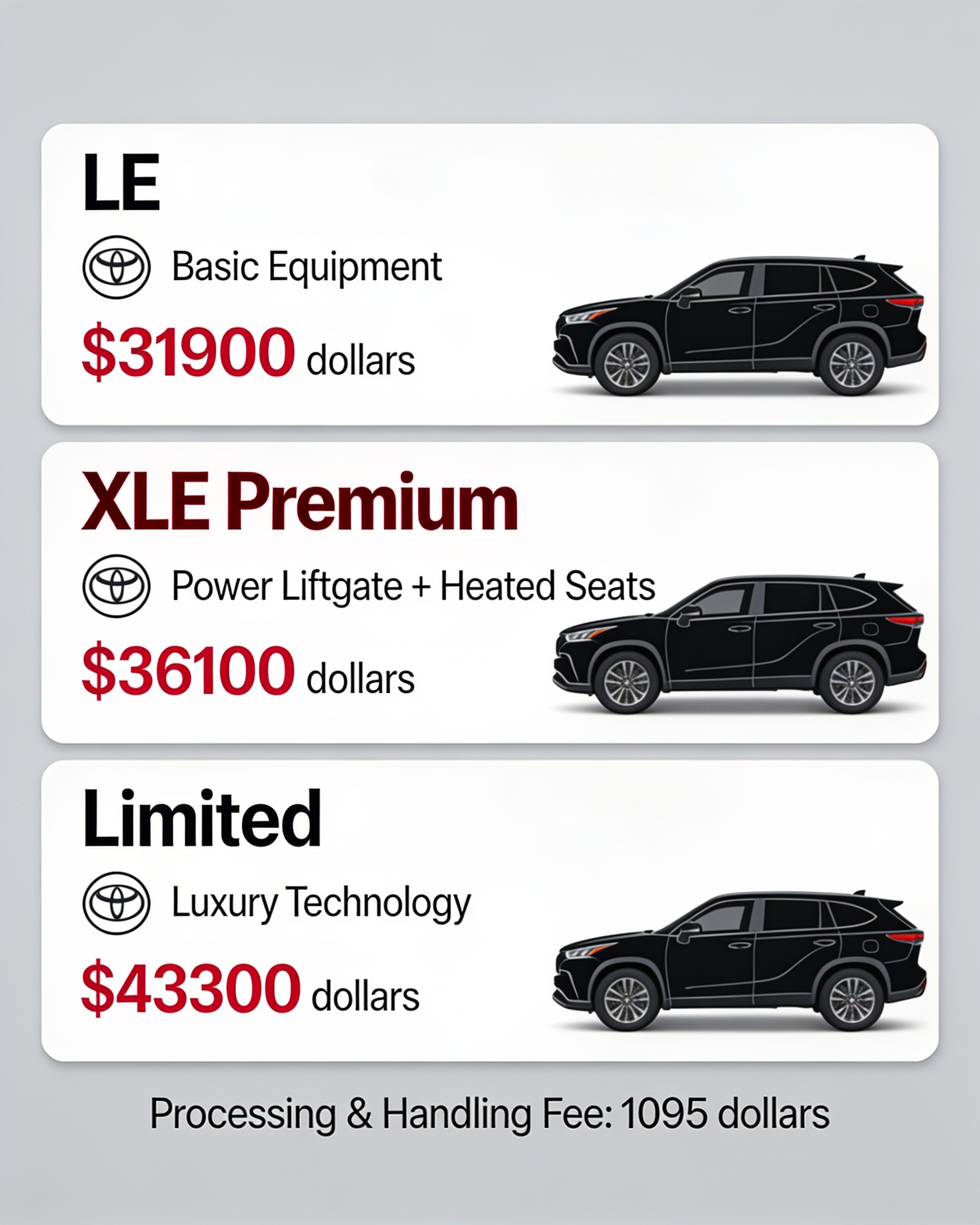
| LE | $31,900 | Best entry price and the cleanest fuel-cost case; manual front seats are the compromise. |
| SE | $34,700 | Sport appearance and heated front seats without crossing $35,000 before fees. |
| XLE Premium | $36,100 | Value sweet spot: power liftgate, heated SofTex-trimmed seats, power driver seat, wireless charging and rear USB ports. |
| Woodland | $39,900 | Standard AWD, all-terrain tires and tow hardware for buyers who will use them; lower 38-mpg combined estimate. |
| XSE | $41,300 | Sport styling and richer cabin features, but less compelling for a cost-focused family. |
| Limited | $43,300 | Luxury and driver-assistance equipment; buy for those features, not for lower ownership cost. |
All prices exclude the $1,095 processing and handling fee and can change with options. The XLE Premium's $4,200 premium over an LE buys equipment a family touches daily. By contrast, the Limited's additional $7,200 over XLE Premium is difficult to defend through utility alone. FWD is the rational default in mild climates; electronic AWD is worth considering for regular snow, steep unpaved access or a verified towing requirement.
Comfort and Packaging Matter More Than Theater
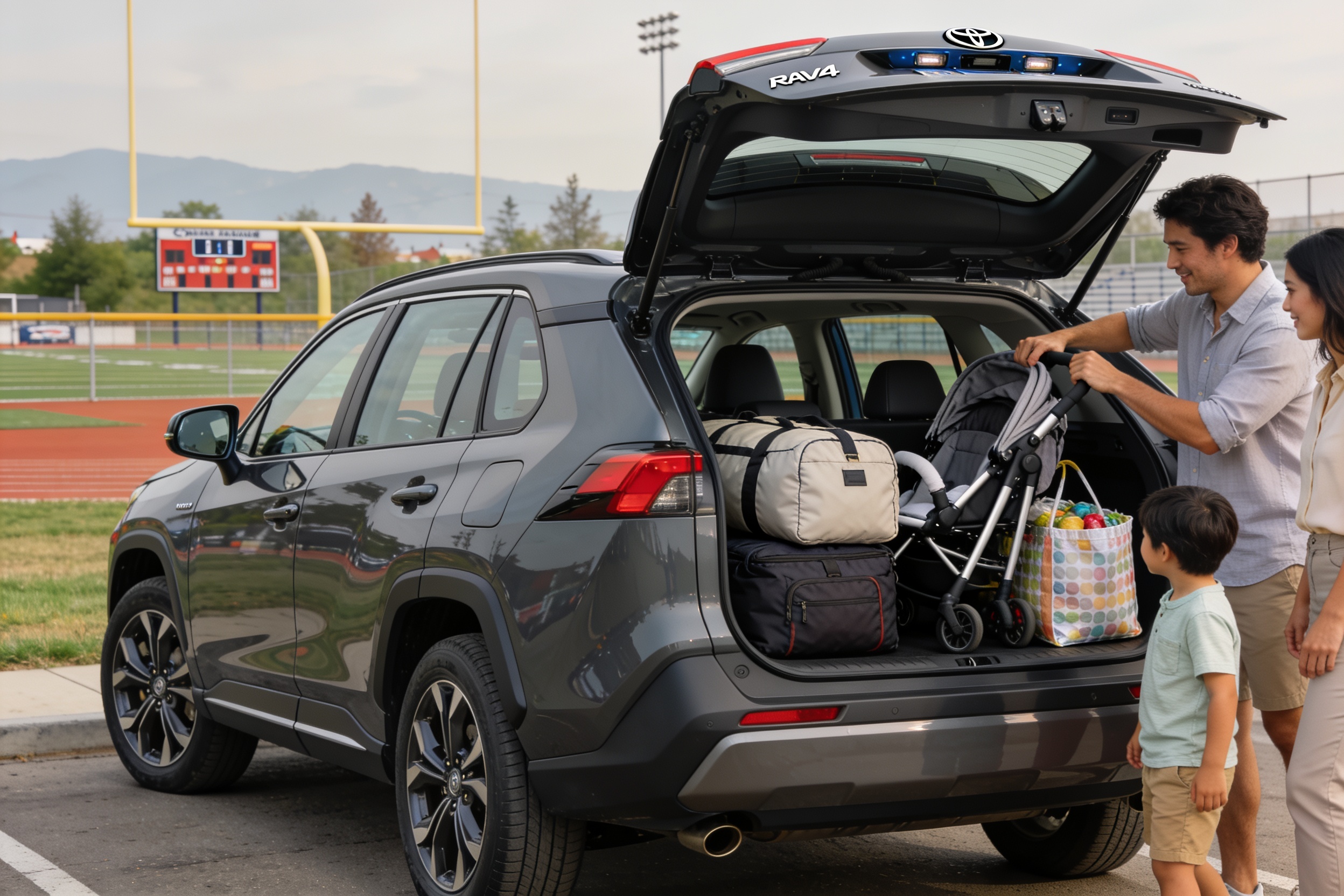
Toyota's redesign concentrates on repeat-use details. The rear seat folds flat, the center console combines a reversible armrest and removable cupholder divider, and selected grades gain a hands-free power liftgate. Up to 70.4 cubic feet behind the front row trails the 2026 CR-V Hybrid's published 71.8-cubic-foot maximum slightly, but both figures describe useful two-row SUV space rather than a token cargo bay.
The chassis changes also target comfort directly. Toyota reinforced suspension mounting points, added high-damping adhesive in the floor and wheelhouse, changed seals and mirror details to reduce wind noise, and retuned springs, shocks and bushings. Those are engineering claims, not a substitute for a test drive, but they show where Toyota spent development effort. A buyer should test the exact wheel and tire combination because an XSE on 20-inch wheels may not ride like an LE or XLE Premium on smaller wheels.
Technology That Supports, Rather Than Dominates, the Cabin
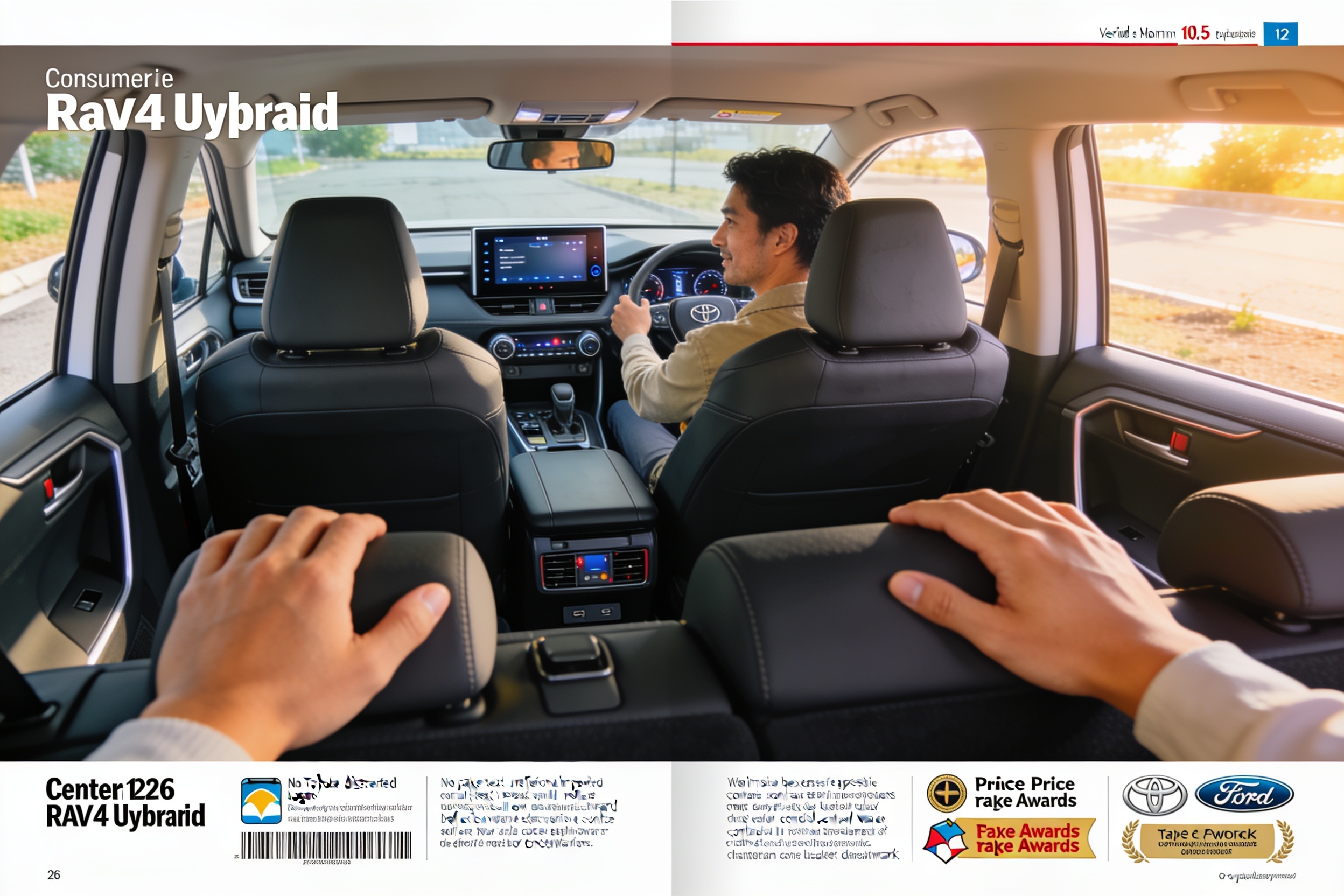
A 12.3-inch digital gauge cluster is standard across the lineup. LE through several mid-level grades use a 10.5-inch central display, while XSE and Limited move to 12.9 inches. Wireless Apple CarPlay and Android Auto are included. The useful distinction is not screen size alone: XLE Premium adds a wireless charger and five USB-C ports, while Limited layers on JBL audio, dual wireless chargers and additional assistance functions.
Toyota Safety Sense 4.0 is standard, along with blind-spot monitoring and rear cross-traffic alert. The suite includes updated detection capabilities, but shoppers should separate feature availability from crash-test performance. NHTSA selected the 2026 RAV4 Hybrid for model-year testing; buyers should check for completed results before purchase rather than applying ratings earned by the prior generation.
More Hybrid Power, Still Tuned for Daily Use
The standard hybrid pairs a 2.5-liter four-cylinder with two motor-generators. FWD versions produce 226 net combined horsepower; AWD adds a rear motor and reaches 236 horsepower. That is enough to address the old complaint that efficiency required sleepy response, but the RAV4's brief remains smooth, predictable progress. Toyota's electronically controlled braking and posture-control systems are intended to improve pedal feel and reduce body roll during turn-in, not create a hot hatch on stilts.
For most commuters, FWD preserves price and fuel economy. AWD distributes electric drive to the rear axle when conditions call for it, which can improve traction without a conventional driveshaft. It becomes the rational choice when climate, access roads or towing justify the cost. Buyers who simply prefer the badge on the liftgate should calculate the fuel and purchase premium first.
Fuel Cost Estimate
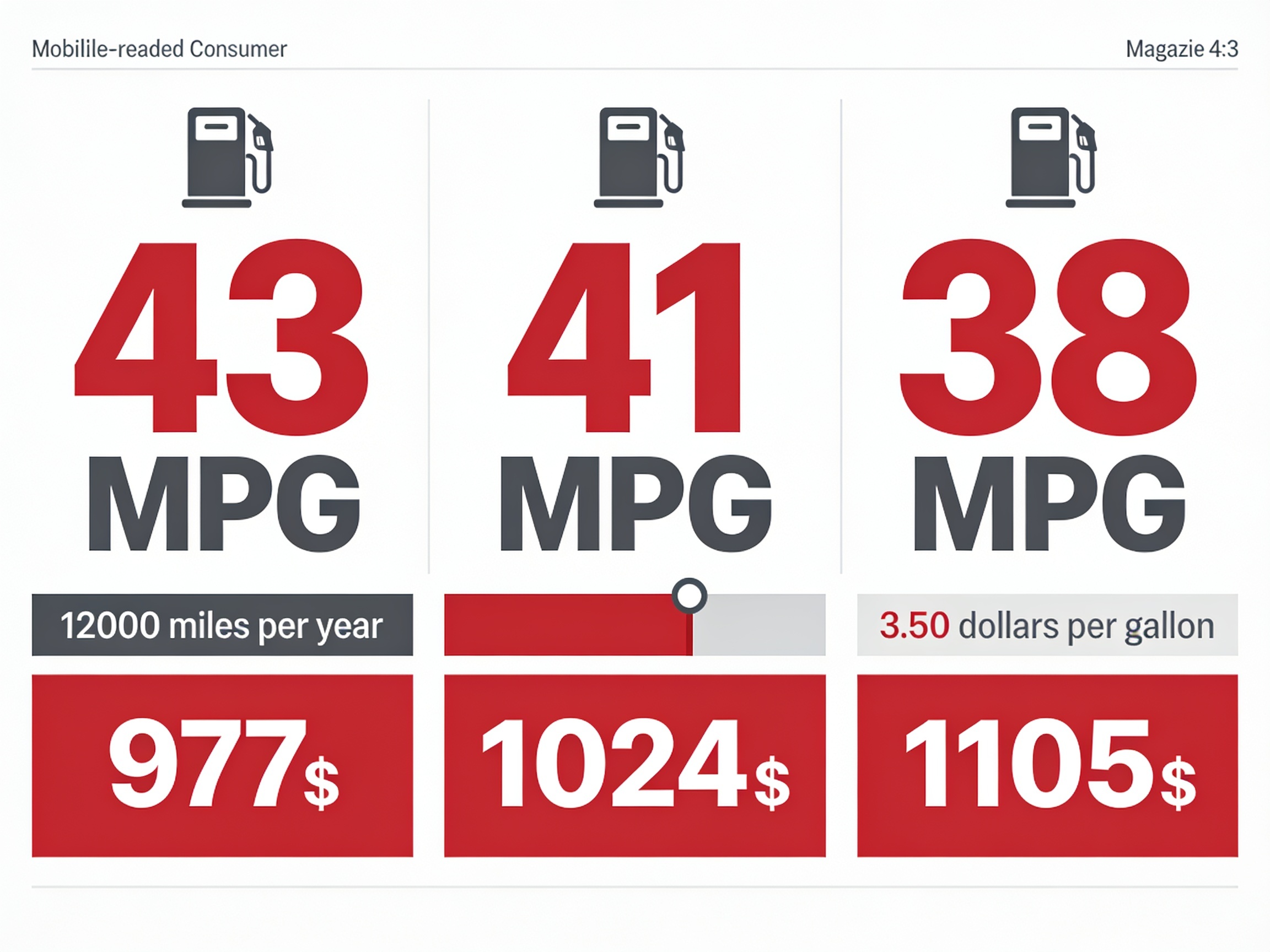
This illustration uses 12,000 miles per year and regular gasoline at $3.50 per gallon. The formula is annual miles divided by combined mpg, multiplied by fuel price. These are planning scenarios, not promises; actual cost changes with grade, weather, traffic, driving style and local fuel prices.
| Combined mpg scenario | Gallons per year | Estimated annual fuel |
|---|---|---|
| 43 mpg | 279 | $977 |
| 41 mpg | 293 | $1,024 |
| 38 mpg | 316 | $1,105 |
The 43-to-38-mpg difference is about $128 per year under these assumptions, or roughly $642 over five years without discounting. That matters, but it cannot justify thousands of dollars in unwanted equipment. Trim price remains the larger lever.
Ownership Cost Estimate Framework
A responsible ownership estimate is not a single online payment. Add negotiated vehicle price, destination, sales tax, registration, loan interest, fuel, personalized insurance quotes and scheduled maintenance; then subtract a conservative resale estimate only if it is supported. Toyota includes one year or 10,000 miles of scheduled maintenance and two years of roadside assistance, while its hybrid-battery warranty extends to 10 years or 150,000 miles. Warranty coverage reduces certain risks but does not guarantee reliability or eliminate wear costs.
For a small-business owner, separate business-use tax questions from the vehicle decision and consult a qualified tax professional. Payload, cargo distribution and towing limits also matter more than a theoretical deduction. A configuration that does the work safely is cheaper than one that needs replacement early.
RAV4 Hybrid vs CR-V Hybrid and Tucson Hybrid
| Vehicle | Hybrid entry price | Published efficiency | Best case | Main trade-off |
|---|---|---|---|---|
| 2026 Toyota RAV4 Hybrid | $31,900 LE plus $1,095 fee | Up to 43 mpg combined, manufacturer estimate | Broad trim and drivetrain choice with strong maximum cargo utility | Upper grades quickly weaken the price advantage |
| 2026 Honda CR-V Hybrid | $35,630 Sport Hybrid plus $1,450 destination | 40 mpg combined FWD; 37 mpg AWD EPA rating | Excellent rear-seat space and 71.8-cu.-ft. hybrid maximum cargo volume | Hybrid entry price starts above RAV4 LE |
| 2026 Hyundai Tucson Hybrid | $32,450 Blue SE, freight excluded | 38 mpg combined Blue SE; 36 mpg other grades | 231 hp, standard AWD and a long powertrain warranty | Lower peak efficiency and a large price jump to Limited |
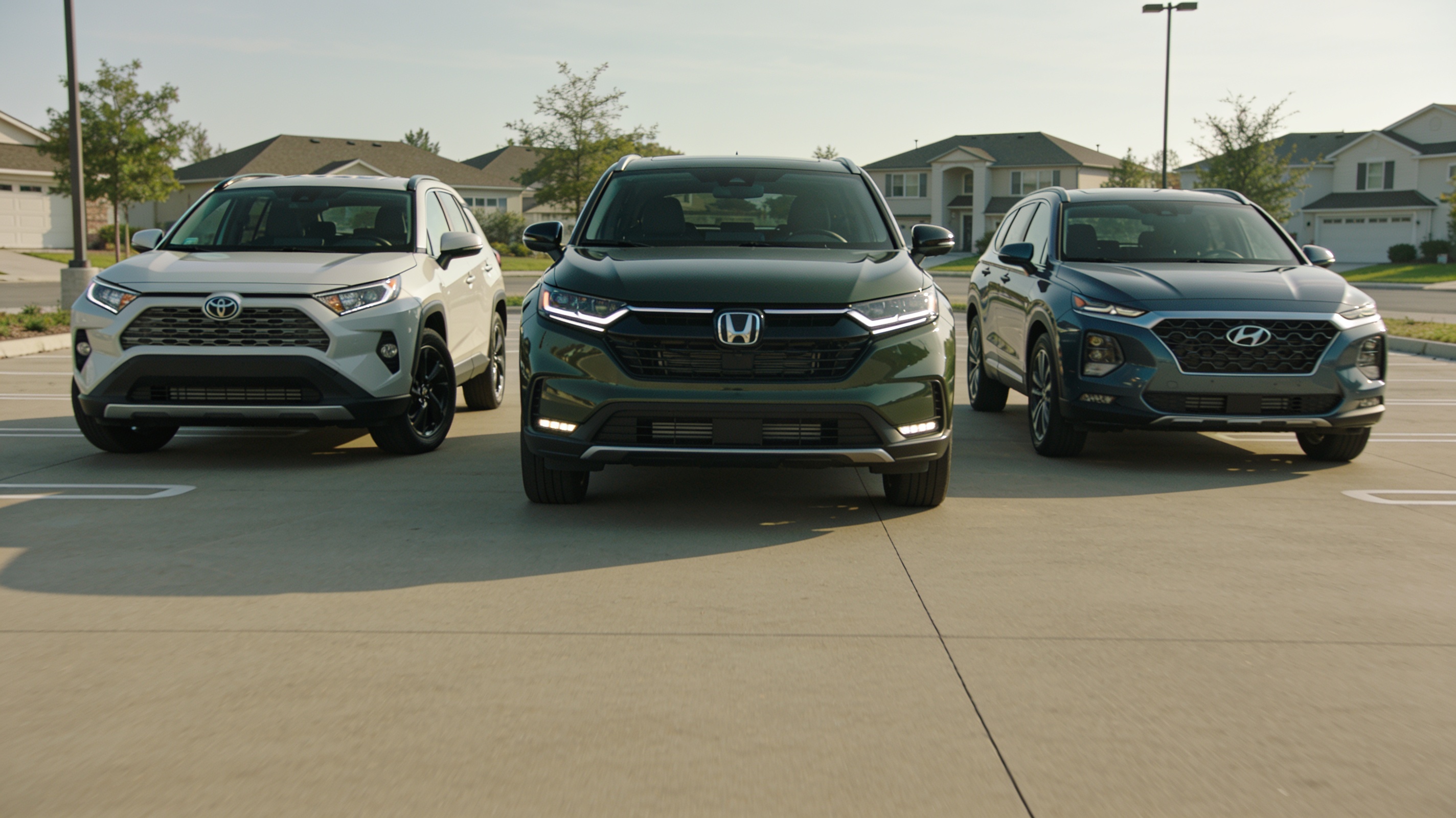
The CR-V Hybrid is the strongest alternative for buyers who prioritize rear-seat room and a calm, roomy cabin. The Tucson Hybrid counters with standard AWD, generous displays and competitive entry pricing. The RAV4's response is range: a low-priced FWD LE, an intelligently equipped XLE Premium, rugged Woodland hardware and richer sport or luxury grades. That breadth helps only when the buyer chooses deliberately.
Best Configuration for the Money
Choose XLE Premium FWD at $36,100 if the vehicle will spend most of its life on paved roads in a mild climate. Its power liftgate, heated SofTex-trimmed seats, power driver's seat, five USB-C ports and parking assistance improve daily family use. Add AWD when recurring snow, a steep driveway or towing makes the rear motor valuable. Buyers who need only efficient transportation should save $4,200 and start with LE.
Skip Limited unless its panoramic roof, ventilated and heated seats, larger display, JBL audio and advanced assistance features are individually worth $7,200 over XLE Premium. XSE makes similar sense for a buyer who values sport styling and its equipment package, not for someone trying to minimize five-year cost. Woodland is the correct specialty choice only when its tires, ground clearance and tow hardware will be used.
Buyer Fit
Who Should Buy It
Value-focused families should buy the RAV4 Hybrid when a quiet daily routine, fuel planning and flexible cargo matter more than expressive handling. It also suits a small-business owner who carries moderate equipment, stays within published load limits and values Toyota's long hybrid-battery coverage. XLE Premium is the broad recommendation; LE is the disciplined budget choice.
Who Should Skip It
Drivers who want the roomiest rear seat should compare the CR-V Hybrid directly. Buyers who want standard AWD at the lowest hybrid price should price the Tucson Hybrid. Anyone drawn to Limited mainly because it is the top grade should pause: the RAV4's strongest advantage is practical efficiency, and premium equipment does not amplify that advantage proportionally.
Frequently Asked Questions
Is every 2026 Toyota RAV4 a hybrid?
Yes in the United States. Toyota offers conventional hybrid and plug-in hybrid powertrains for 2026; there is no gasoline-only U.S. grade.
What is the best 2026 RAV4 trim for most families?
XLE Premium is the best balance for most families because it adds a power liftgate, heated SofTex-trimmed seats, a power driver seat, wireless charging and rear USB ports without Limited pricing.
What fuel economy does the 2026 RAV4 Hybrid get?
Toyota's manufacturer estimates reach 43 mpg combined for efficient FWD configurations. AWD and specialty grades vary, with combined estimates generally between 38 and 42 mpg.
How much cargo space does the 2026 RAV4 have?
Toyota's official 2026 brochure lists up to 70.4 cubic feet with the second row folded. Check the exact configuration for behind-row measurements and accessories that affect usable space.
Is AWD worth buying?
AWD is worthwhile for regular snow, loose access roads or specified towing needs. FWD is the more efficient and less expensive default for paved-road use in mild climates.
Can the 2026 RAV4 tow 3,500 pounds?
Specified AWD grades, including XLE Premium AWD, are listed up to 3,500 pounds. LE AWD is listed at 1,750 pounds, so verify the grade, equipment and owner's-manual requirements.
Is the 2026 RAV4 Hybrid reliable?
A new generation does not have a meaningful long-term reliability record yet. Toyota provides 8-year/100,000-mile hybrid-component coverage and 10-year/150,000-mile hybrid-battery coverage, but warranties are not reliability guarantees.
Is the RAV4 better than the Honda CR-V Hybrid?
The RAV4 offers a lower hybrid entry price and broader configuration range. The CR-V Hybrid deserves a direct test for rear-seat space and cabin usability. The better choice depends on trim, drivetrain and passenger priorities.
How does the RAV4 compare with the Hyundai Tucson Hybrid?
The Tucson Hybrid includes standard AWD and produces 231 horsepower, while the RAV4 offers FWD efficiency and more grade variety. Compare delivered prices because both brands exclude certain freight or handling charges from headline MSRP.
Does the 2026 RAV4 have a safety rating?
NHTSA selected the 2026 RAV4 Hybrid for model-year testing. Check NHTSA and IIHS for completed new-generation results before purchase; do not transfer the prior generation's ratings automatically.
Final Verdict
The 2026 RAV4 earns its reputation by becoming a more complete everyday machine: standard hybrid power, stronger output, useful cabin technology and a chassis program aimed at comfort. It is not the automatic winner in every comparison, and its top grades can cost enough to invite serious luxury and value questions.
For the value-focused family, choose XLE Premium FWD, test the ride on its exact wheels, and add AWD only for a defined need. For the strictest budget, take the LE's efficiency and keep the option sheet short. That decision preserves the RAV4's real advantage: dependable-seeming, practical transportation whose numbers support the way the vehicle will actually be used.
Sources and References
- The Next Adventure Begins: 2026 RAV4 Arrives this Winter — Toyota USA Newsroom, updated May 8, 2026; accessed August 3, 2026.
- All-New 2026 Toyota RAV4 Takes Center Stage — Toyota USA Newsroom; accessed August 3, 2026.
- 2026 RAV4 Brochure — Toyota; accessed August 3, 2026.
- 2026 CR-V Specifications and Features — American Honda Motor Co.; accessed August 3, 2026.
- 2026 Tucson Hybrid Specifications — Hyundai Motor America; accessed August 3, 2026.
- MY 2026 Vehicles Selected for 5-Star Safety Ratings Testing — National Highway Traffic Safety Administration; accessed August 3, 2026.


Advertisement
You Might Also Like

The 2026 Subaru Forester passes this focused audit only when delivered price, gas-versus-hybrid choice, trim equipment, financing, and total outflow works under conservative assumptions. Choose the configuration that preserves the Subaru Forester's core advantage and avoid paying for upgrades that do not support the target use case. Keep every unverified item conditional until the exact vehicle and written documents confirm it.

The 2026 Subaru Crosstrek passes this focused audit only when tires, ground clearance, traction, trim equipment, cargo, and the useful upgrade stop works under conservative assumptions. Choose the configuration that preserves the Subaru Crosstrek's core advantage and avoid paying for upgrades that do not support the target use case. Keep every unverified item conditional until the exact vehicle and written documents confirm it.

The 2026 Hyundai Kona belongs on the shortlist when its daily strengths survive the configuration, transaction, ownership, and exit audit. Choose the configuration that preserves the Hyundai Kona's core advantage and avoid paying for upgrades that do not support the target use case. Verify the exact vehicle and choose the last configuration step that solves a real, repeated need.

The 2026 Ford Explorer belongs on the shortlist when its daily strengths survive the configuration, transaction, ownership, and exit audit. Choose the configuration that preserves the Ford Explorer's core advantage and avoid paying for upgrades that do not support the target use case. Verify the exact vehicle and choose the last configuration step that solves a real, repeated need.

The 2026 Ford Bronco passes this focused audit only when two or four doors, engine, axles, lockers, tires, roof, towing, and the useful capability stop works under conservative assumptions. Choose the configuration that preserves the Ford Bronco's core advantage and avoid paying for upgrades that do not support the target use case. Keep every unverified item conditional until the exact vehicle and written documents confirm it.

The 2026 Jeep Wrangler belongs on the shortlist when its daily strengths survive the configuration, transaction, ownership, and exit audit. Choose the configuration that preserves the Jeep Wrangler's core advantage and avoid paying for upgrades that do not support the target use case. Verify the exact vehicle and choose the last configuration step that solves a real, repeated need.